
Water is the number one enemy of a home’s foundation, and the ground right outside your walls decides where that water goes. Positive grading around a foundation means the soil slopes away from the house, so rain and melting snow drain into the yard instead of soaking the soil against your basement walls. It’s one of the simplest, least expensive ways to protect your home, and one of the most common problems we find during home inspections in Northeast Ohio.
In this guide, we’ll explain what positive grading is, how much slope your yard needs, the damage negative grading can cause, and how to check and fix the grading around your own home.
What Is Positive Grading?
Grading is the slope of the ground around your house. There are three types:
- Positive grading: The ground slopes down and away from the foundation. Water flows away from the house. This is what you want.
- Flat grading: The ground is level next to the house. Water sits, soaks in, and has nowhere to go.
- Negative grading: The ground slopes toward the foundation, funneling water straight to your basement walls.
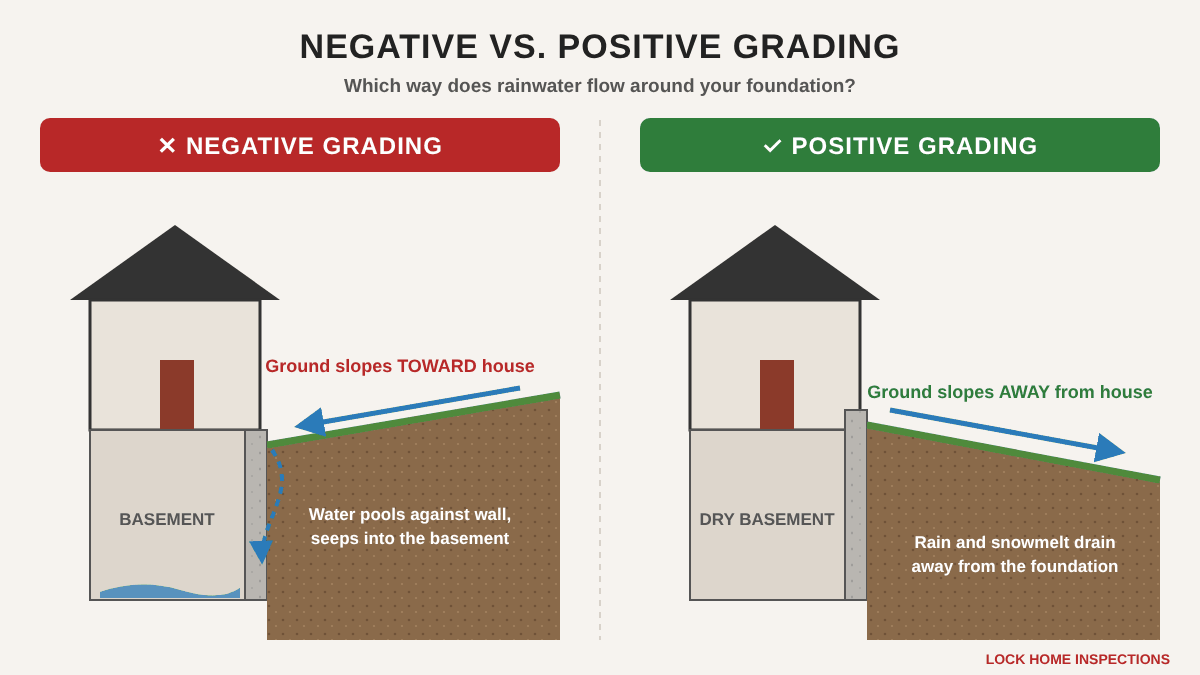
Even homes that were graded correctly when they were built can develop negative grading over time. The backfilled soil next to a new foundation is loose, and it settles for years after construction, often leaving a low spot right against the house where water collects.
How Much Should the Ground Slope Away From a Foundation?
The International Residential Code (IRC), the model code that Ohio’s residential building code is based on, sets clear minimums in Section R401.3 (Drainage):
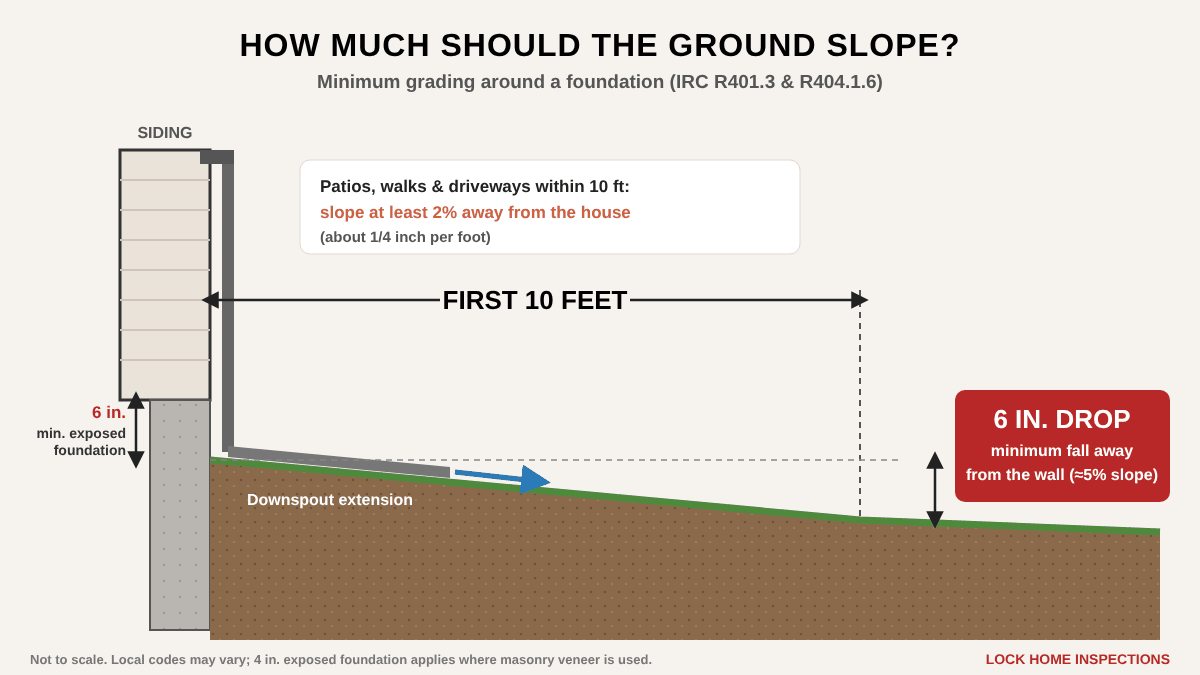
- 6 inches of fall within the first 10 feet. The ground should drop at least 6 inches over the first 10 feet out from the foundation. That’s roughly a 5% slope.
- 2% slope for hard surfaces. Patios, sidewalks, and driveways within 10 feet of the house should slope at least 2% (about 1/4 inch per foot) away from the building.
- Swales or drains where space is tight. When a property line, wall, or neighboring slope makes 6 inches of fall impossible, a swale (a shallow, sloped channel) or drain should carry water away from the house instead.
The code also requires concrete and masonry foundation walls to extend at least 6 inches above the finished grade (4 inches where brick or stone veneer is used). That gap keeps soil and splashing water off your siding and away from the wood framing above the foundation.
What Happens When Water Flows Toward Your Foundation?
When grading sends water toward the house, the soil against the foundation stays saturated. That can lead to a long list of costly problems:
- Wet or leaking basements. Water finds its way through cracks, wall joints, window wells, and the joint where the floor meets the wall.
- Hydrostatic pressure on foundation walls. Saturated soil pushes against basement walls and can contribute to cracking, bowing, or leaning, especially in block foundations.
- Mold, mildew, and musty odors. Ongoing moisture in a basement or crawl space creates the perfect conditions for mold growth and poor indoor air quality.
- Efflorescence and damaged finishes. White, chalky deposits on basement walls, peeling paint, and ruined drywall or flooring are all signs of moisture moving through the foundation.
- Overworked sump pumps. Water that should have drained across the yard ends up in your drain tile and sump pit, making the pump run more often and wear out faster.
- Rot and pests. Damp soil and wood near the foundation attract termites, carpenter ants, and other wood-destroying insects.
Why Grading Matters Even More in Northeast Ohio
Homes in Lake, Geauga, and Cuyahoga counties face a combination of conditions that make good drainage especially important:
- Lake-effect snow and spring snowmelt. Our part of the state sees heavy snowfall, and when it melts, a winter’s worth of water ends up on the ground around your house in a matter of days.
- Freeze-thaw cycles. Water-saturated soil expands as it freezes. Repeated freezing and thawing can put stress on foundation walls, walkways, and steps.
- Dense, slow-draining soils. Many neighborhoods in our area have clay-heavy soil that absorbs water slowly, so surface water that isn’t directed away tends to linger right where it lands.
How to Check the Grading Around Your Home
You don’t need special equipment to get a good idea of whether your grading is working.
Watch it during a heavy rain
The easiest test is to walk around the house during or right after a downpour. Look for puddles near the foundation, water running toward the house, and downspouts dumping water right next to the walls. Water should be moving away from your home on every side.
Measure the slope with a string line
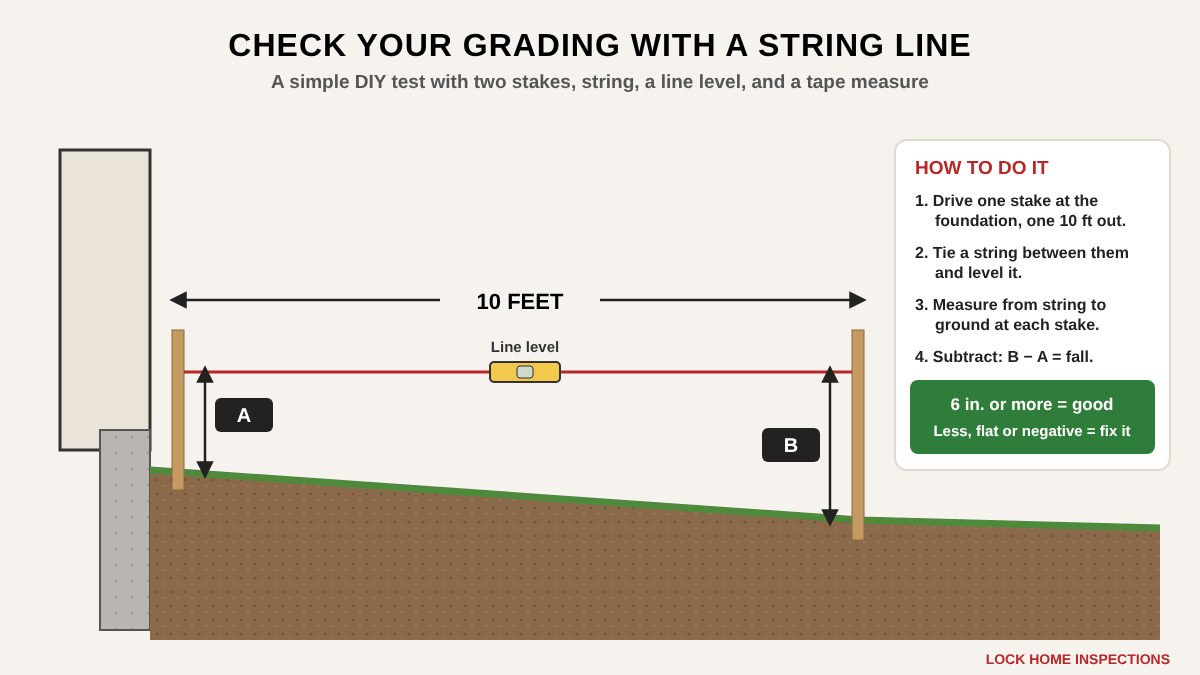
For a more precise check, use two stakes, a string, an inexpensive line level, and a tape measure:
- Drive one stake into the ground next to the foundation and another 10 feet straight out into the yard.
- Tie a string between the stakes and adjust it until the line level reads level.
- Measure from the string down to the ground at each stake.
- Subtract the measurement at the house from the measurement 10 feet out. The difference is how much your yard falls. You want at least 6 inches.
Repeat the test on each side of the house, since grading often varies from one side to another.
Look for these warning signs
- Low spots or trenches in the soil next to the foundation
- Mulch beds or landscape edging that trap water against the house
- Patios, walkways, or driveways that tilt toward the house
- Soil or mulch piled up against the siding, with little or no foundation visible
- Water stains, efflorescence, or dampness on the inside of basement walls
- Window wells that collect water or have no drainage
How to Fix Negative Grading
Many grading problems are a weekend project, while others call for a professional. Here are the most common fixes:
- Add and compact soil. Build up the low areas next to the foundation with a dense, clay-based fill soil, compacting it as you go, then top it with a few inches of topsoil and seed or sod. Avoid sand, gravel, or loose mulch as fill next to the house, because they let water soak straight down to the foundation.
- Keep the foundation exposed. As you add soil, make sure you still have at least 6 inches of foundation showing between the soil and the siding.
- Extend your downspouts. Each downspout can drop hundreds of gallons of water during a storm. Use extensions or buried drain lines to discharge the water at least 5 to 10 feet from the house, and keep your gutters clean so they don’t overflow.
- Re-slope or replace hard surfaces. Patios and walkways that tilt toward the house may need to be raised, mudjacked, or replaced so they slope away.
- Add a swale or drain. If your lot doesn’t have room for 6 inches of fall, a swale, French drain, or yard drain can redirect water. Be sure the water doesn’t end up on a neighbor’s property.
- Call a pro for big jobs. Steep lots, widespread drainage problems, or existing foundation damage are best handled by a qualified grading or drainage contractor.
Grading isn’t a one-time job. Soil settles, landscaping changes, and mulch builds up over the years, so check your grading every spring and after major storms.
Grading and Drainage During a Home Inspection
Grading and drainage are a standard part of every Lock Home Inspections home inspection. Our licensed, InterNACHI-certified inspector evaluates the slope of the ground around the foundation, the condition of gutters and downspouts, the drainage of hard surfaces like driveways and patios, and the basement or crawl space for signs of water intrusion. Thermal imaging can also help us spot hidden moisture that isn’t visible to the eye.
If we find negative grading or drainage concerns, your home inspection report will show you exactly where the problem is, with photos and clear recommendations, so you can address it before it turns into a costly foundation or basement repair.
For more on how landscaping choices like mulch beds, decorative rock, and flower beds can affect your foundation, see InterNACHI’s article “The Hidden Threat in Your Yard: How Poor Grading and Landscaping Can Flood Your Foundation.”
Frequently Asked Questions About Foundation Grading
What is the proper slope for grading around a house?
The ground should fall at least 6 inches within the first 10 feet from the foundation, which is about a 5% slope. Patios, walkways, and driveways within 10 feet of the house should slope at least 2% (about 1/4 inch per foot) away from the building.
Can bad grading cause foundation problems?
Yes. Grading that slopes toward the house keeps the soil against the foundation saturated. That can lead to basement leaks, mold, cracked or bowing walls, and frost-related damage during Northeast Ohio winters.
Can I fix negative grading myself?
Often, yes. Small low spots can be corrected by adding and compacting clay-based soil so it slopes away from the house, then covering it with topsoil and grass. Larger drainage problems, steep lots, or existing foundation damage are best handled by a professional.
How far should downspouts drain from the foundation?
Downspouts should discharge water at least 5 to 10 feet from the house, onto ground that slopes away or into a buried drain line that carries water away from the foundation.
Protect Your Foundation With a Professional Home Inspection
Whether you’re buying a home, getting ready to sell, or simply want peace of mind about your current home, Lock Home Inspections can help you spot grading and drainage problems before they become expensive repairs. We serve homeowners and home buyers throughout Northeast Ohio, including Lake, Geauga, Cuyahoga, Summit, and Ashtabula counties.
Schedule your home inspection online or call us at 440-227-5422 with any questions.